


A connected local growth system: $42,000/m in sales five months after launch
How Terracotta Wellness and innflo combined integrated marketing communications, specialist AI agents, automation, and expert human oversight to generate demand, capture intent, and build a compounding local customer-acquisition system.
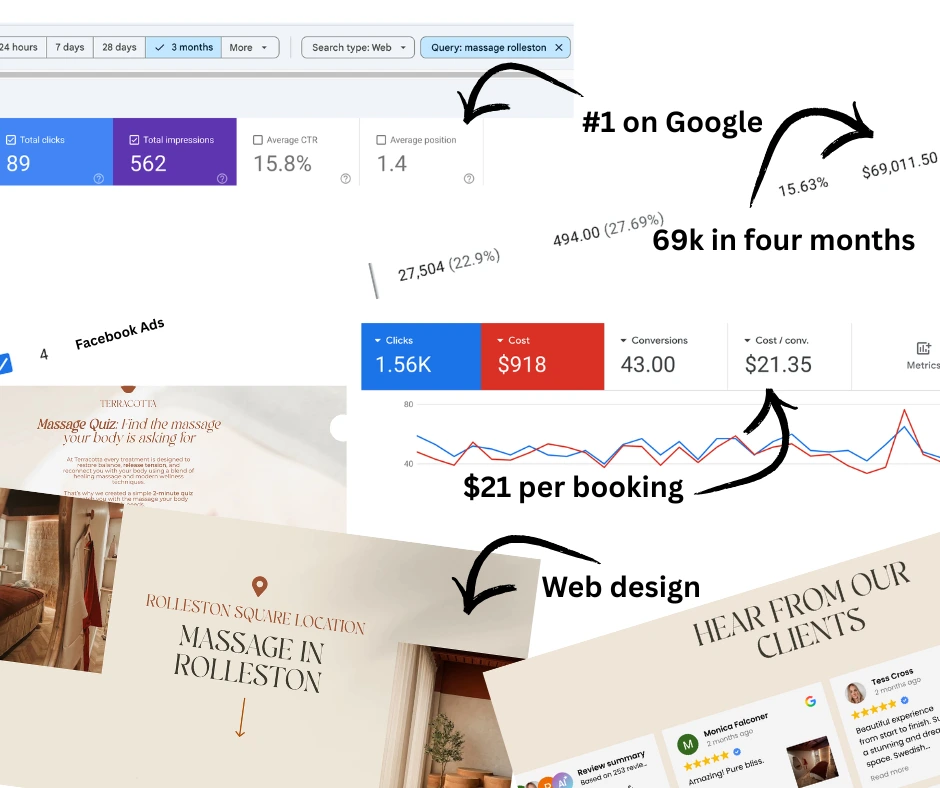
Key results
Tools
WordPress · Acuity Scheduling · ActiveCampaign · ScoreApp · Innflo marketing agents · Google Ads · Meta Ads · Trustindex · Google Business Profile · Google Search Console · Google Analytics 4 · Aglow memberships
- Inexpensive local demand generation
- Memberships booked out after first month
- Bookings are consistent
- 11x on the front end (launch funnel)
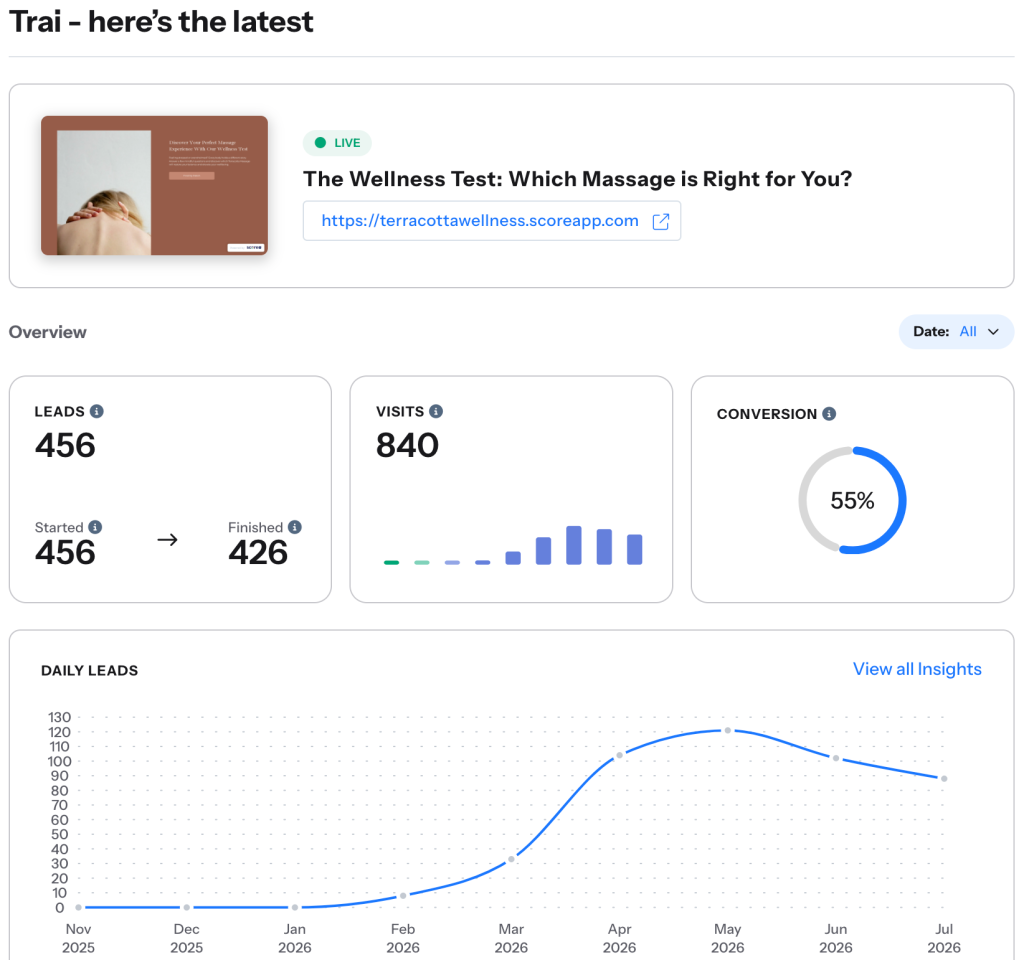
- Approximately 800 local leads generated
- Less than $0.50 per competition lead
- 20 bookings from the first two follow-up emails
- 8% recorded email funnel conversion rate
- $98,000 in tracked revenue over three months
- $25 average Google Ads cost per customer
- #1 Google ranking for “massage Rolleston” and other related terms
- 250+ five star reviews within six months
- Consistent 25x return on marketing spend overall after three months
Terracotta did not rely on a single campaign. It built an acquisition and retention system in which awareness, search, email, booking, reviews, and memberships reinforced one another.
THE COMMERCIAL OUTCOME
Executive summary
The work began before a single ad was written. Terracotta owner Trai gave innflo access to his business so we could build enough context for the marketing engine: the Rolleston market, the premium positioning, treatment mix, launch timing, capacity, customer experience, competitive environment, pricing, and the commercial goals for the first three months.
That context was used to formulate an integrated marketing communications (IMC) strategy built around one central objective: generate strong local demand without weakening the premium brand through constant discounting. Innflo’s client-specific model then translated the strategy into individual recommendations.
Each recommendation was reviewed by a marketing specialist and presented inside Terracotta’s isolated innflo workspace for approval. Once Trai approved a recommendation the work moved into implementation. We collaborated closely with Trai on access, creative, offers, operational details, and customer-facing language, while specialist agents handled repeatable analysis and execution under expert human supervision.
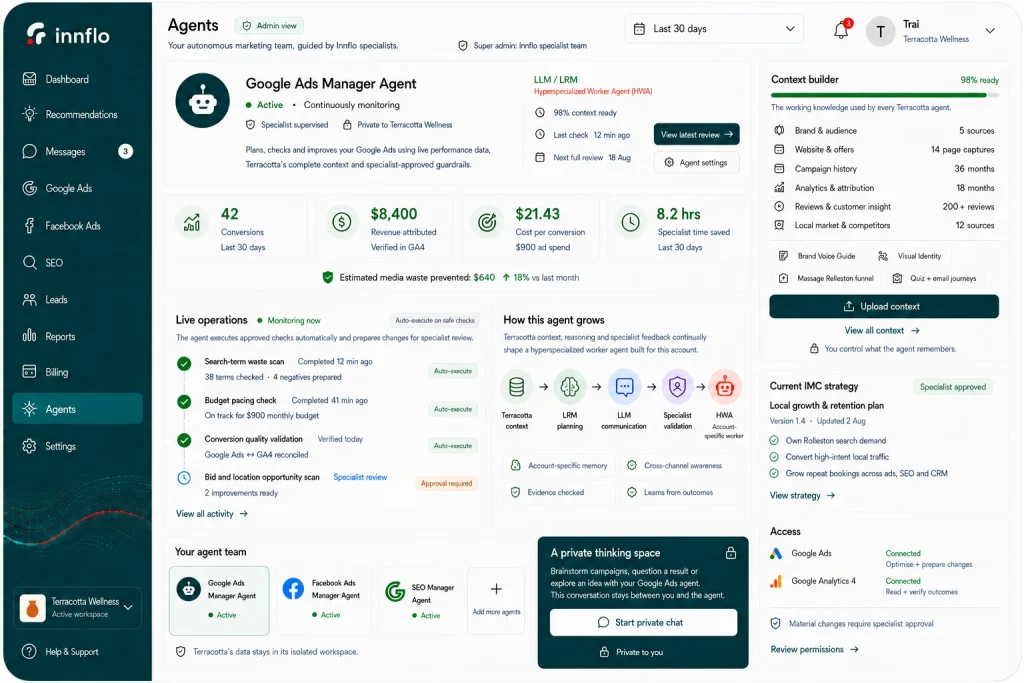
Figure 1. Example of Terracotta’s innflo Agent screen for Google Ads Hyperspecialized Worker Agent (HWA).
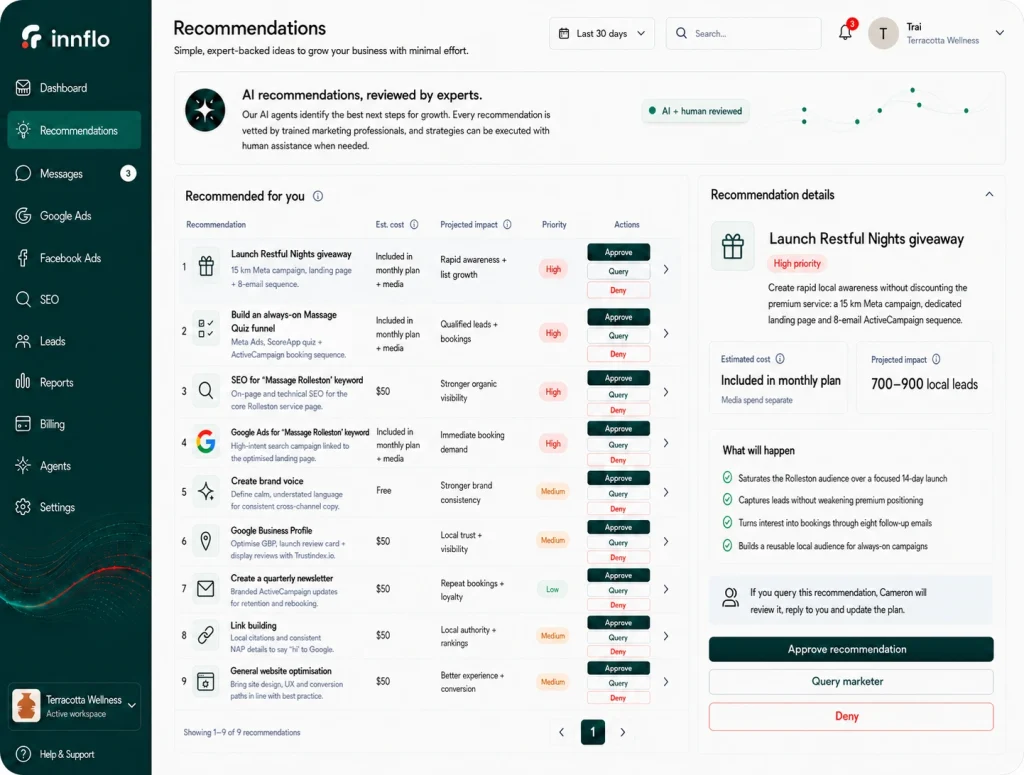
Figure 2. Example of Terracotta’s innflo Recommendations.
This hybrid structure is the core of innflo: AI agents make marketing operations faster and less expensive, while you and your experienced marketing specialists remain responsible for judgment, quality, brand fit, risk, and final decisions.
A Facebook Ad Manager Agent can analyse results and manage improvements; a Google Ads Management Agent can monitor search terms, budgets, conversion costs, and landing-page alignment; an SEO Agent can identify on-page improvements and support local citation work; and CRM, analytics, and CRO agents can monitor the rest of the funnel. The agents share the client’s approved context but operate within role-specific permissions.
Innflo’s proprietary models draw on patterns from thousands of successful campaigns covering most industries and business models. Our clients gain access to AI marketing models specifically trained for their specific marketing operations.
The long-term product direction is fully automated marketing operations for bounded, repetitive work – monitoring, analysis, drafting, tagging, reporting, and routine optimization – combined with explicit approval gates and human specialist control wherever brand judgment, commercial risk, or consequential change is involved.
The result was a connected local growth engine. Meta created inexpensive awareness and captured contact details. ActiveCampaign nurtured that attention and converted it into appointments. SEO, Google Ads, the Google Business Profile, and branded search captured people when intent increased. The website and social channels reinforced a contemporary, aspirational brand. The in-store customer experience (CX) generated unusually detailed reviews, retention, referrals, and demand for memberships.
Terracotta moved from a new local wellness destination that needed awareness into a recognized Rolleston brand with steady bookings, a booked-out membership offer, a leading organic search position, and a growing base of repeat customers.
WHAT CHANGED?
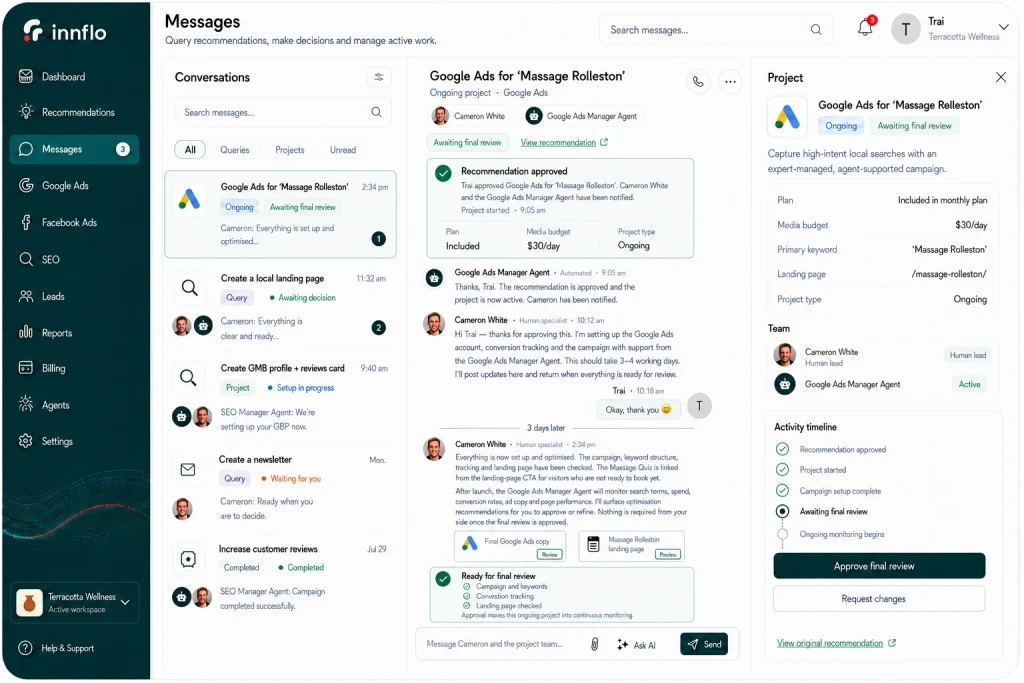
Figure 3. Messages screen example for Google Ads agent + human specialist team project – based on recommendations drawing from thousands of successful campaigns.
1. Strategy before channels
The first recommendation was not “run Facebook ads” or “do SEO.” It was to agree on the commercial and communication system that every channel would support. The IMC established a common promise, a common audience, a common geography, and a common customer journey before channel specialists began their work.
The agreed priorities
The first recommendation was not “run Facebook ads” or “do SEO.” It was to agree on the commercial and communication system that every channel would support. The IMC established a common promise, a common audience, a common geography, and a common customer journey before channel specialists began their work.
- Build concentrated awareness within the practical drive-time catchment around Rolleston and nearby Selwyn communities.
- Protect Terracotta’s premium category position by leading with experience, relevance, and added value rather than habitual price discounting.
- Create measurable demand quickly enough to support launch capacity, then convert that initial attention into an always-on acquisition funnel.
- Develop owned audience assets – email contacts, quiz data, customer records, and first-party behavioral data – rather than renting all future access from advertising platforms.
- Make every touchpoint feel like the same business: ad, landing page, email, search result, booking flow, treatment, post-care message, and review request.
- Begin with the smallest credible experiment, because local SEO and paid media do not always require a large initial commitment to produce a meaningful result.
How innflo operationalized the strategy
The first recommendation was not “run Facebook ads” or “do SEO.” It was to agree on the commercial and communication system that every channel would support. The IMC established a common promise, a common audience, a common geography, and a common customer journey before channel specialists began their work.
- Client context and goals. Business data, market constraints, brand priorities, margins, capacity, and goals were loaded into Terracotta’s isolated and exportable client context.
- Integrated plan. The overall innflo model assessed the opportunity across awareness, conversion, search, CRM, retention, and measurement.
- Individual recommendation. A specific, costed recommendation was created, checked by a specialist, and presented for Trai’s approval.
- Approved implementation. The relevant specialist agent and human expert completed the work with Trai, using only the permissions and tools needed for that task.
- Continuous monitoring. Agents watched channel performance and surfaced anomalies, opportunities, and optimization recommendations; specialists reviewed material changes.
Traditional delivery often charges senior human time for repetitive monitoring, formatting, reporting, and first-pass analysis. Innflo automates much of that operational layer, allowing expert attention to concentrate on decisions that genuinely require experience.
WHY THIS LOWERS COST
2. Establishing a brand voice before scaling attention
Before scaling awareness, we clarified how Terracotta should sound. The brand needed to feel premium but not performative; calming but not vague; contemporary but still warm; expert but never clinical or overbearing. The resulting direction – “Quiet confidence. Considered care. Words with space around them.” – became the decision filter for cross-channel communication.
The brand system in practice
- Lead with stillness, restoration, and felt experience rather than aggressive urgency.
- Use understated, specific claims in place of inflated spa clichés.
- Write with visual space and short, controlled sentences when the channel allows it.
- Preserve clarity and local relevance in performance channels, even when a more expressive headline appears elsewhere.
- Balance the target language needed for search – such as “massage Rolleston” – with the softer voice expected from a premium wellness brand.
- Carry the same tone through ads, landing pages, newsletters, quiz results, post-care instructions, social posts, and review responses.
This was not a cosmetic exercise. A clear voice made AI output more useful because every specialist agent inherited an explicit standard. It reduced rewriting, limited cross-channel drift, and allowed the human specialist to review against agreed principles rather than personal preference.

Figure 4. Terracotta’s brand voice system: a quiet, contemporary expression designed to hold together across performance marketing and the in-person experience.
3. Launching local demand without discounting the brand
Terracotta was entering a local market with a beautiful brand and strong service proposition, but limited awareness. The first major growth recommendation was a premium giveaway rather than a broad opening discount. This protected price integrity while giving local prospects a compelling reason to stop, engage, and discover the brand.
The hero prize was the two-hour Restful Nights package, positioned as a complete body reset designed around rest and sleep. Three packages were offered, each valued at $230. The promotion did more than collect entries: it introduced Terracotta’s atmosphere, treatment philosophy, location, price point, and premium visuals before the business asked for a booking.
Why the awareness campaign worked
- Geography was in the message, not only the targeting. The copy opened with “Rolleston,” and the creative visibly featured the Rolleston Square logo and map-pin cue. Local prospects could recognize relevance before reading the details.
- The creative called out the right customer state. Sleep, stress, and the desire for a reset gave the offer an emotionally recognizable job rather than presenting massage as a generic luxury.
- The brand looked contemporary and aspirational. Warm terracotta tones, editorial typography, a premium model, and a calm composition made the prize feel valuable and consistent with the physical space.
- The offer was specific and substantial. A named two-hour experience valued at $230 gave prospects something concrete to imagine. The comments – “amazing prize,” “sounds fabulous,” and “feeling relaxed already” – showed clear offer-market resonance.
- Exclusivity created attention without routine discounting. Three winners and a limited campaign window created scarcity, while the prize format maintained the perception of premium pricing.
- Referral mechanics extended the paid reach. Optional bonus-entry and sharing opportunities encouraged participants to involve friends, amplifying local visibility beyond the paid impression. Future campaigns should continue to keep personal-timeline sharing optional in line with Meta’s promotion rules.[6]
- A compressed flight created rapid salience. The campaign was planned at $20 per day for 14 days. The short, concentrated flight increased the chance that the same local audience would notice Terracotta repeatedly while the launch message was still fresh.
- The budget was modest and measurable. Meta recorded $422.15 of spend, 791 attributed giveaway leads, and a $0.56 cost per lead. That gave Terracotta a large local contact base at a cost that left room for downstream nurture.
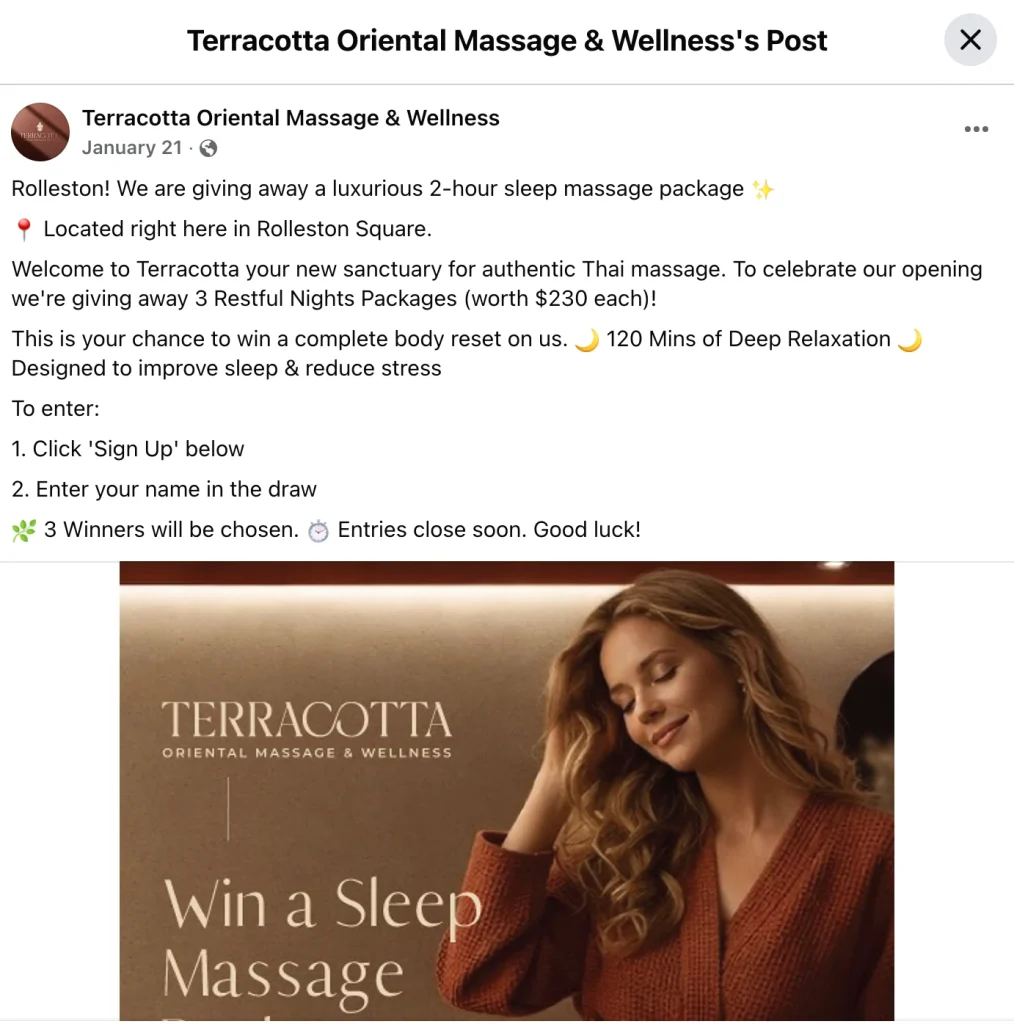

Figure 5. The launch creative combined premium visual language with unmistakable local relevance: Rolleston Square, a map pin, a named package, and a clear $230 value.
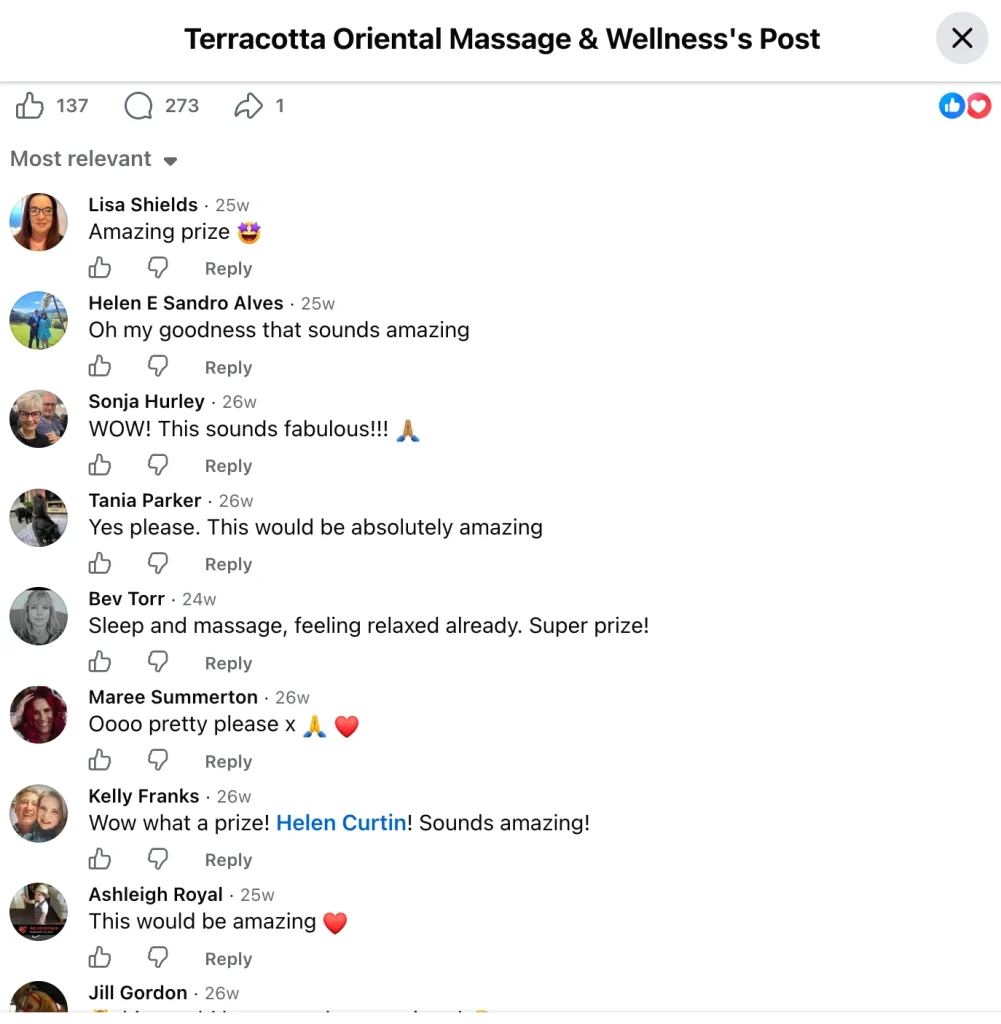
Figure 6. The visible response—137 reactions and 273 comments in the supplied capture—showed that the prize generated genuine desire, not merely low-cost form fills.
4. Turning launch attention into measurable demand
The campaign produced both platform-level and site-level signals. Meta attributed 481 giveaway leads to $222.15 in spend, or $0.46 per lead. Google Analytics recorded 453 users and 572 Restful Nights signup events in the December 31–January 27 reporting view.
A separate seven-day page report showed 525 giveaway landing-page views and 437 thank-you-page views. Because those are page views rather than deduplicated people, the 437/525 ratio should be treated as directional completion evidence – not a formal conversion rate. Overall the campaign generated approximately 500 signups in just 7 days with 800 total signups from the short giveaway campaign.
The important point is consistency across independent systems: the campaign created several hundred local actions, a large email audience, and a visible surge in launch demand.
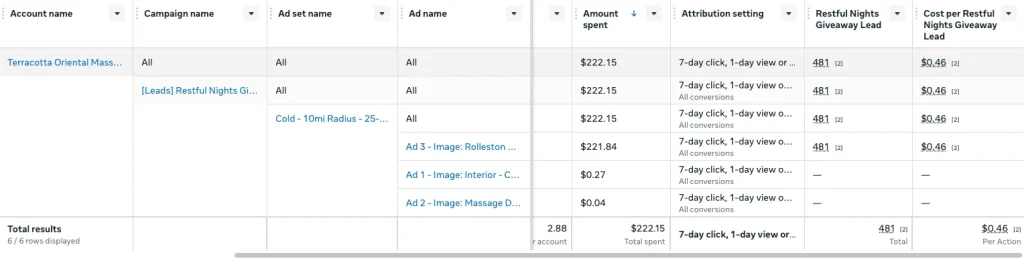
Figure 7. Meta Ads reporting: $222.15 spent, 481 attributed Restful Nights giveaway leads, and $0.46 per lead.
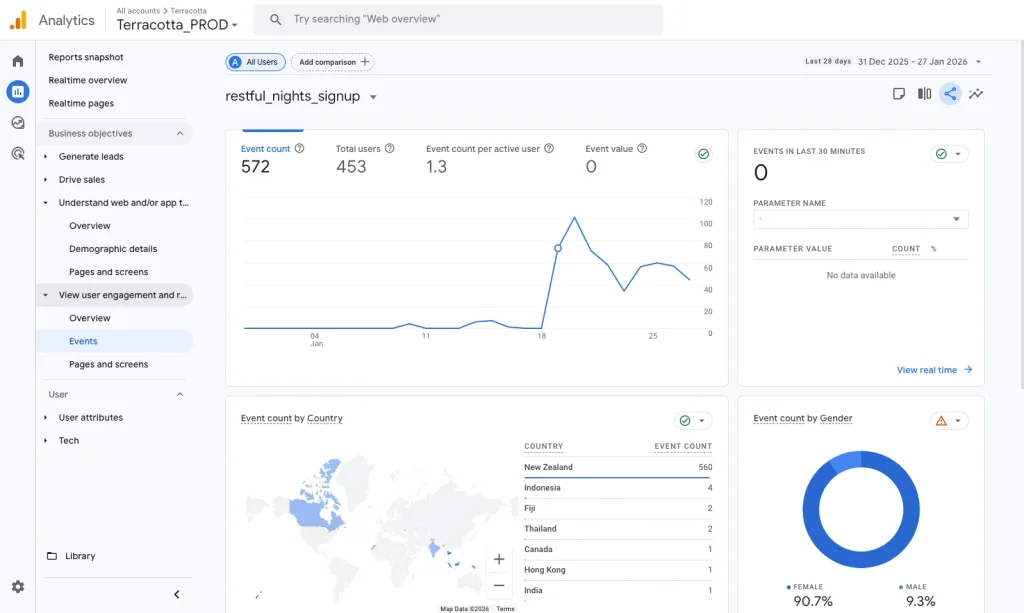
Figure 8. GA4 signup-event reporting: 572 events from 453 users, with 560 recorded events from New Zealand and a strongly female audience profile.
The giveaway did not simply generate inexpensive leads. It created a locally concentrated audience that could be converted by email, retargeted on Meta, and recognized later when searching Google.
EVIDENCE-LED CONCLUSION
5. Converting the giveaway audience with email and early access
Lead generation only becomes commercially useful when the follow-up preserves the promise that earned the lead. Giveaway entrants entered a branded ActiveCampaign sequence that confirmed entry, explained the Restful Nights experience, introduced adjacent services, maintained anticipation, and prepared the audience for Terracotta’s opening offer.
The first email was sent to 803 contacts and recorded a 44.8% open rate and 5.4% click rate. The second was sent to 788 contacts and recorded a 43.8% open rate and 8.2% click rate. Later messages continued to record open rates between 36.1% and 39.3% in the supplied automation capture. The first two follow-up emails were linked to 20 bookings in the internal campaign record.
The owned audience continued to create value after launch. Later newsletter and reactivation work reused the same branded CRM foundation, and internal reporting recorded 36 bookings from a win-back sequence. Those bookings form part of the wider tracked system outcome and should not be added again on top of the $98,000 total.
The offer moved naturally from prize awareness to paid trial. Rather than cutting the core treatment price, Terracotta invited the first 50 local customers to receive a value-adding enhancement: a 30-minute massage add-on, a 20-minute scalp massage with a Korean skin treatment, or a $20 credit for a future package. This preserved the premium frame while reducing the perceived risk of trying a new business.
The first 50 appointments sold out within 48 hours. The recorded email funnel conversion rate was 8%, and the launch funnel returned 11x on the front end. Because prospects could see the Meta ad, open an email, search for Terracotta, visit the Google Business Profile, and then book directly, the sellout should be treated as a coordinated system outcome rather than credited to one last click.
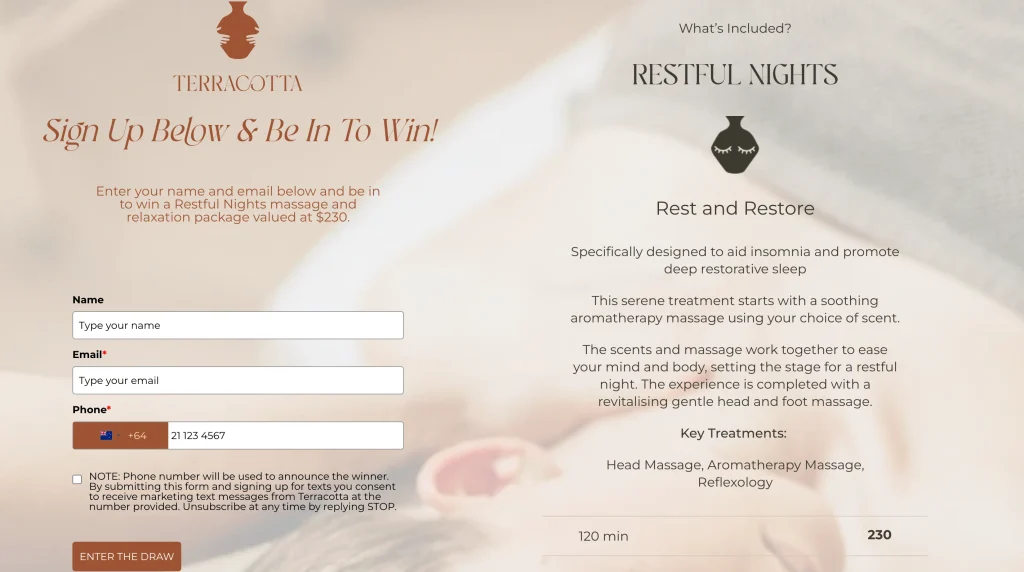
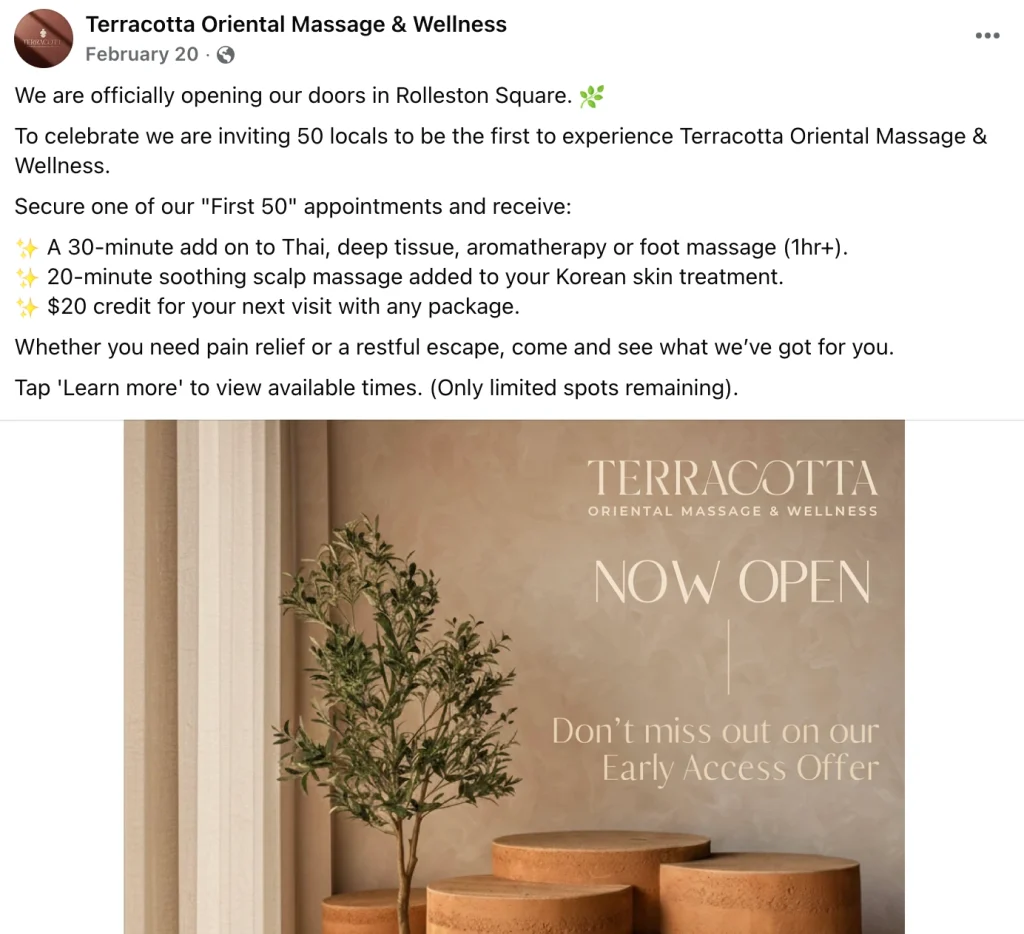
Figure 9. The First 50 early-access offer converted launch attention into paid appointments using premium add-on value rather than an across-the-board discount.
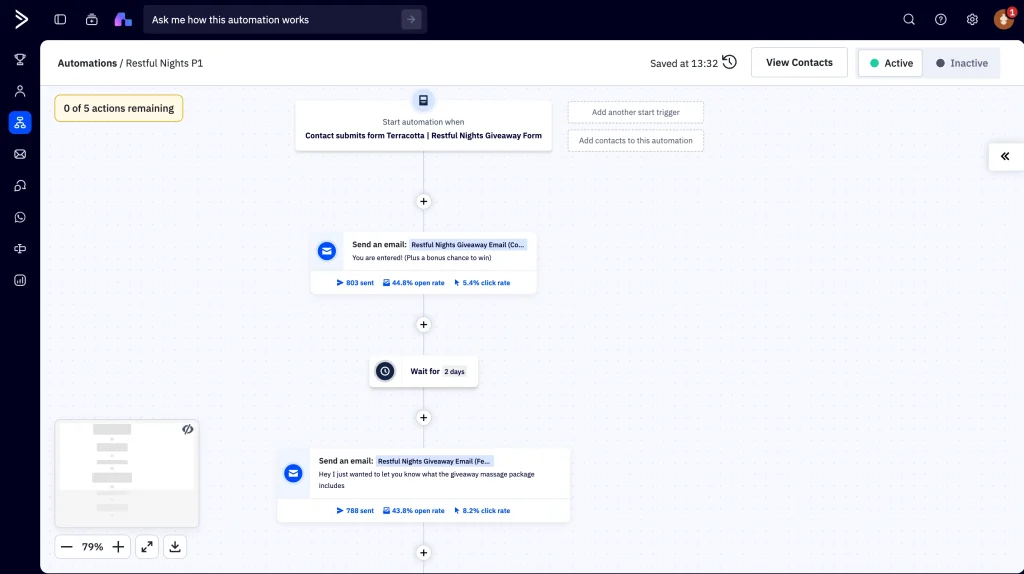
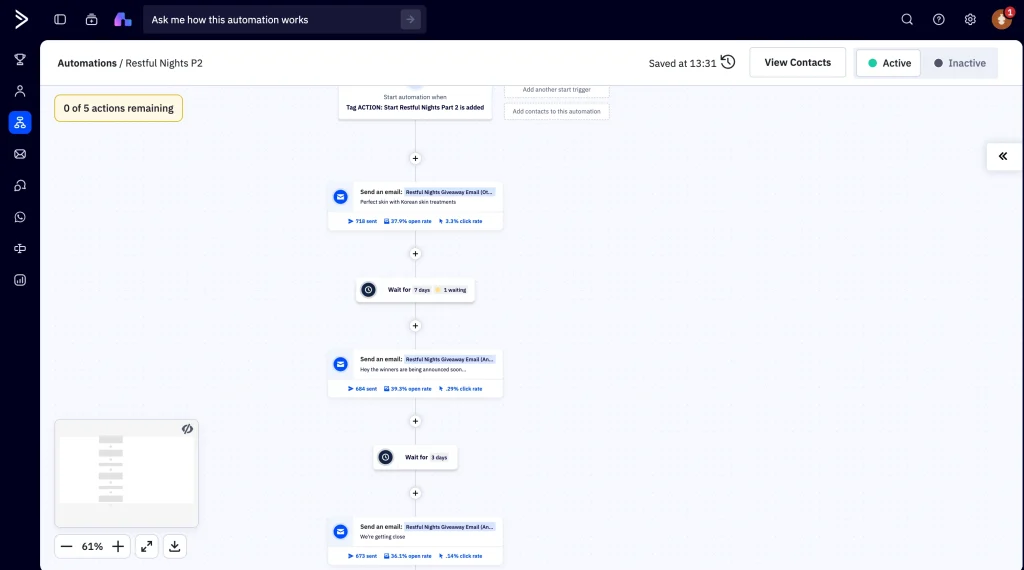
Figure 10. The first two ActiveCampaign messages: 803 sends at 44.8% opens and 5.4% clicks, followed by 788 sends at 43.8% opens and 8.2% clicks.
6. Replacing a launch spike with an always-on funnel
The giveaway was an efficient launch mechanism, but it was not designed to run forever. Once Terracotta had awareness and a meaningful owned audience, the system shifted into a lower-intensity, always-on funnel that could generate and capture demand continuously.
The connected funnel
- Demand creation. Meta quiz ads, branded social content, and occasional high-value campaigns introduce the brand before a person is actively searching for a massage.
- Owned lead capture. ScoreApp captures needs and contact details through a useful massage quiz, while ActiveCampaign delivers the result, a welcome offer, and follow-up content.
- Consideration. Branded social posts, reviews, the Google Business Profile, the website, service pages, and email help the prospect decide whether Terracotta feels credible, relevant, and worth the premium.
- Intent capture. Google Ads, organic search, branded search, local pages, and the optimized /massage-rolleston page meet prospects when they are ready to compare or book.
- Conversion. Acuity provides a direct scheduling path, supported by clear services, pricing, location detail, social proof, FAQs, and consistent calls to action.
- Experience and retention. The treatment, atmosphere, staff interaction, add-ons, post-care email, review request, loyalty program, referral program, and Aglow membership turn a first appointment into repeat value.
This is also why branded search increased in importance. A prospect may repeatedly notice Terracotta on Facebook, remember the name later, and search “Terracotta Wellness” rather than clicking the original ad. Google may receive the final measurable interaction, but Meta created part of the demand. GA4 attribution tools exist precisely because customer journeys involve multiple touchpoints and credit can shift depending on the selected model and lookback window.[5]
7. Building a useful quiz-led demand-generation engine
The always-on Meta campaign moved from a large opening prize to a lower-friction utility: “Which massage does your body need today?” The ScoreApp quiz asks a short set of questions, provides a personalized recommendation, and connects the result to a welcome gift. On the live website, the quiz is presented as a quick way to identify the right treatment, helping people who do not yet know whether they need deep tissue, Thai, aromatherapy, or another service.[1][2]
This mechanism performs three jobs at once. It generates a lead, educates the prospect, and reduces choice anxiety. It also creates structured first-party data that can improve segmentation. A person seeking pain relief should not receive identical follow-up to someone seeking relaxation, sleep support, or a facial. That context can be used by the CRM and copy agents while remaining inside Terracotta’s isolated client workspace.
The supplied quiz automation shows a 42.1% open rate for the result email and a 45.6% open rate with a 4.2% click rate for the follow-up. The lead is tagged as completed, creating a clean operational handoff for later nurturing, exclusion, or treatment-specific communication.

Figure 11. The branded quiz splash (no nav menu) page frames the tool as personalized guidance rather than a generic lead form, and reinforces trust with visible Google review proof.
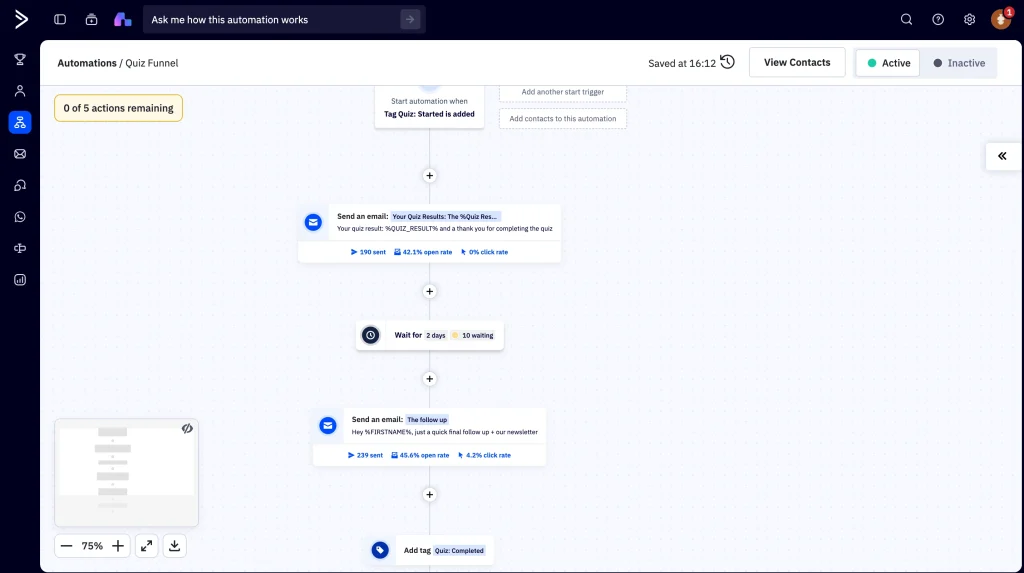
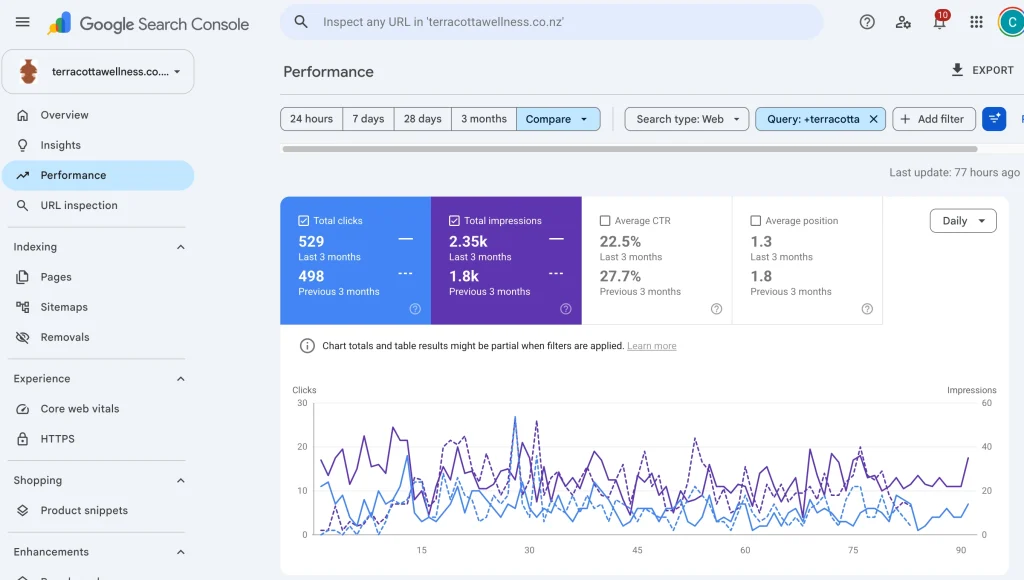
Figure 12. Quiz automation in ActiveCampaign: personalized result delivery, timed follow-up, and completion tagging. And the branded searches on search console showing the campaign also increased overall brand recognition and awareness over the six month period as of August 2026.
8. Optimizing the website for search and conversions without flattening the brand
The website had to do two jobs at the same time: rank for clear commercial searches and feel like Terracotta. That required a deliberate balance. Search optimization could not turn the site into repetitive keyword copy, while brand writing could not become so abstract that Google or a first-time visitor failed to understand the service and location.
The /massage-rolleston page became the core search and paid landing page
- A clear “Massage in Rolleston” topic and location signal aligned the page with high-intent search behavior.
- Treatment sections matched specific needs and service categories, allowing both people and search engines to understand the offer.
- Rolleston Square, Masefield Drive, parking, accessibility, hours, and the booking path removed local conversion friction.
- Drive-time context for Lincoln, Prebbleton, Templeton, West Melton, Hornby, and Christchurch widened relevance without pretending Terracotta had multiple physical locations.
- FAQs answered practical pre-booking questions and supported long-tail relevance.
- Trustindex review proof, the Google Business Profile, consistent NAP information, and local citations reinforced legitimacy.
- The massage quiz served visitors who were interested but not ready to choose a treatment.
The live page now carries the key combination directly: the commercial phrase “Massage in Rolleston,” a Rolleston Square location, over 250 five-star reviews, service-specific copy, nearby drive times, the quiz, and an immediate booking route.[2] Google’s own Ads guidance identifies landing-page usefulness and relevance – along with ad relevance and expected click-through rate – as core Quality Score components, which supports the decision to use a tightly aligned page rather than send paid traffic to a generic homepage.[3]
SEO work began with the smallest defensible interventions because local search opportunity depends on existing authority, technical condition, content, and competition. Innflo does not assume every business needs an expensive content program. In this case, focused on-page optimization, local relevance, internal alignment, and early citation work were enough to produce material movement. The target query “massage Rolleston” reached the #1 position, with an average Search Console position of 1.4 during the reported period. The CRO and SEO agents had lots of suggestions for the overall website which we implemented like a gallery, reviews section, more CTAs, internal linking, adding more copy and pages.
The Link-Building Agent supported local citation building and NAP consistency. This work complements – not replaces – the quality of the site, Google Business Profile, reviews, and real-world prominence. Google states that local results are primarily determined by relevance, distance, and prominence, which explains why website relevance, accurate business information, and a strong review profile work better as a system than in isolation.[4]
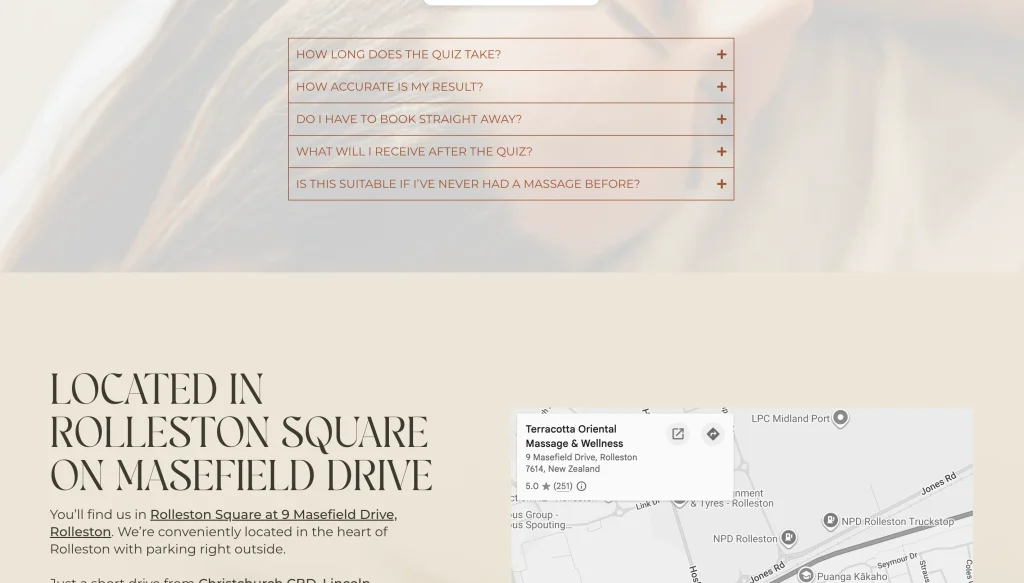
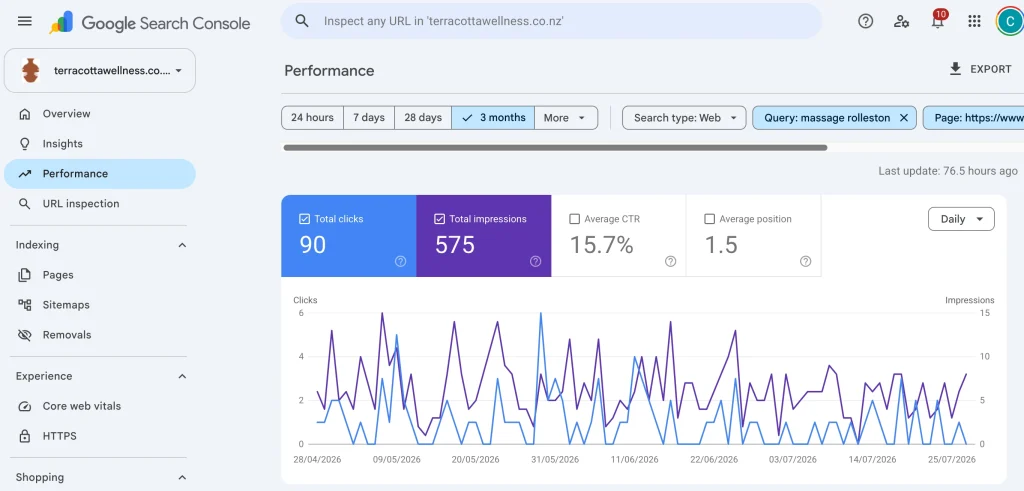
Figure 13. The landing-page location section makes Rolleston Square, the street address, parking, and map context explicit—useful for both local conversion and search relevance. And the search console results for SEO.
9. Capturing bottom-of-funnel demand with Google Ads
Meta was used primarily to create and nurture demand; Google Ads was used to capture people already searching. The campaign and landing page were built around the same local service intent, with the /massage-rolleston page acting as the post-click destination.
What the Google Ads Management Agent monitored
- Search terms and negative-keyword opportunities, particularly low-intent, irrelevant, or adult-service queries.
- Spend concentration around high-intent Rolleston massage themes rather than broad traffic volume.
- Cost per customer, conversion volume, impression eligibility, and budget constraints.
- Alignment between keywords, ad copy, location language, and the landing page.
- Conversion tracking in Google Ads and GA4, with specialist review when platform totals diverged.
- Opportunities to extend coverage only after the core campaign proved efficient.
The reported average Google Ads cost per customer after three months was $25. That result mattered because it gave Terracotta a reliable bottom-of-funnel channel to complement Meta’s cheaper but earlier-stage lead generation. The system could therefore spend modestly on each channel, learn where the marginal return was strongest, and increase investment only after the evidence justified it.
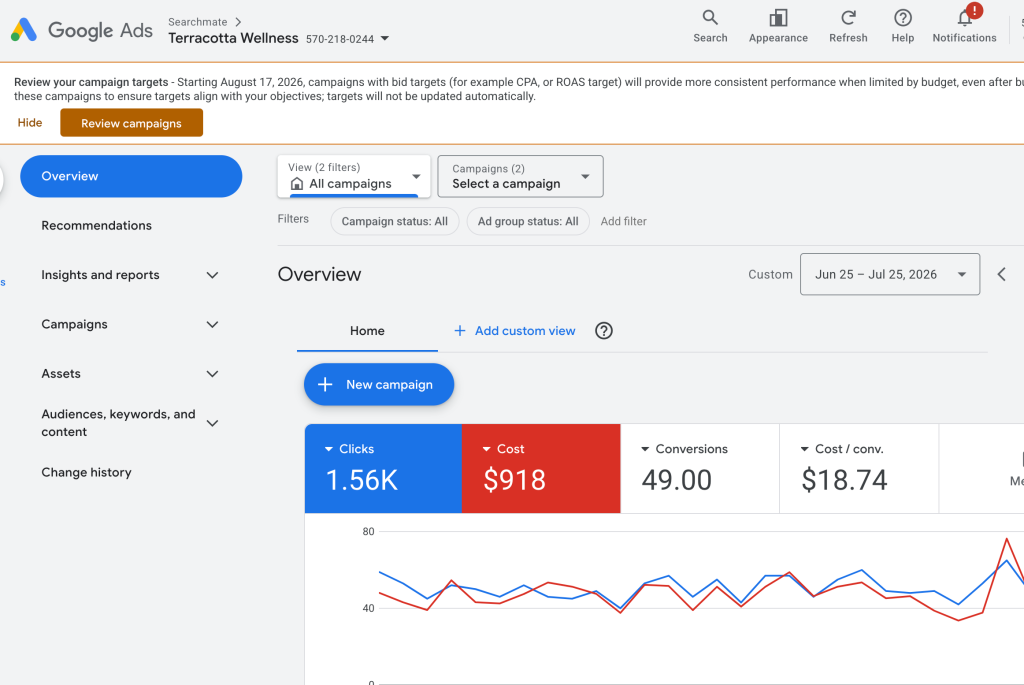
Figure 14. Google Ads results with permission from Trai (Terracotta owner) after three months of innflo agent ramping to KPI.
Meta was not judged only on last-click bookings, and Google Ads was not asked to generate broad awareness. Each channel was evaluated according to the job it performed in the customer journey.
CHANNEL ROLE CLARITY
10. Making local trust visible
For a local wellness business, the Google Business Profile is both a discovery surface and a decision surface. Prospects compare distance, rating, review detail, photos, services, hours, directions, and the apparent quality of the venue before they ever reach the website.
Terracotta’s marketing system supported profile accuracy, imagery, services, review collection, and social proof on the website. The supplied profile capture shows a 5.0 rating and 250+ Google reviews, while the three-month case-study result records 200 five-star reviews added or achieved during the measured growth period.
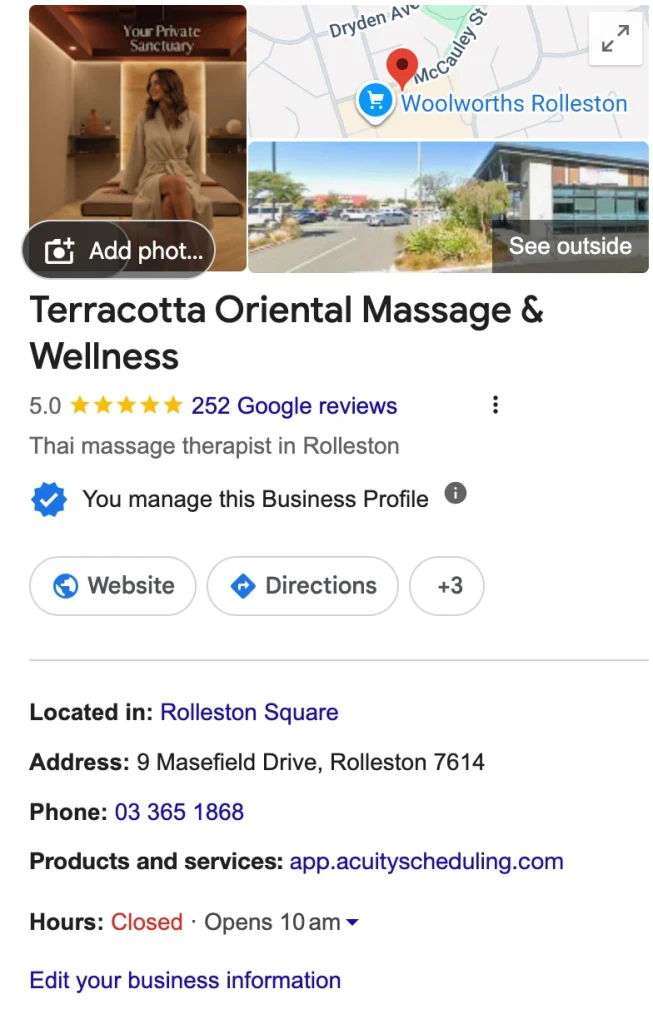
Figure 15. Google Business Profile proof: 5.0 stars, 252 reviews in the supplied capture, and a clear Rolleston Square location. 100 reviews within 6 months gives us an extra SEO, Google Ads and general schema advantage.
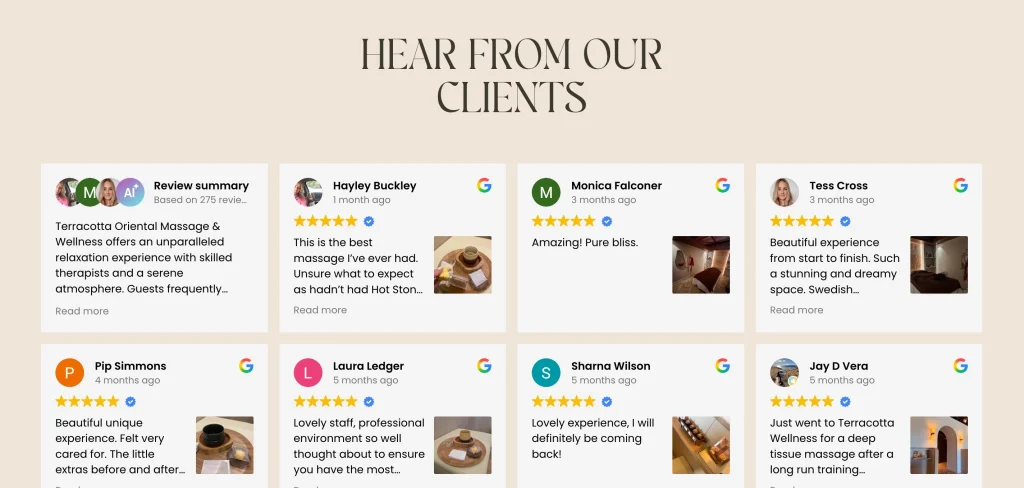

Figure 16-17. Google Business Profile proof wall widget: 5.0 stars, 270+ reviews in the supplied capture. As of August 2026. Clear example of UGC from the excellent CX post treatment.

Figure 18. Large photography increases trust and conversions. Contemporary style designed by innflo reinforces the brand. Effortless chic – on brand web design and branding.
11. Turning customer acquisition into retention and advocacy
The strongest marketing claim would fail if the appointment did not deliver. Terracotta’s advantage is that the customer experience reinforces the message at every stage – from the first impression of the creative to the feeling of entering the space.
The end-to-end experience
- Before the appointment. The prospect encounters consistent visuals, local proof, clear pricing, relevant service information, easy booking, and branded confirmation or preparation messages.
- On arrival. The atmosphere, lighting, scent, materials, and calm staff communication make the premium promise tangible.
- During treatment. Therapist expertise, personalized pressure and treatment choices, and well-presented add-ons create both clinical confidence and emotional care.
- After treatment. Herbal tea, high-quality energy balls, considerate post-care guidance, and a low-friction review request extend the feeling of being looked after.
- Review and referral. An NFC-enabled review card allows satisfied customers to tap their phone and leave feedback while the experience is fresh. The website, Google profile, and Trustindex then make that proof visible to the next prospect. Innflo ensures the best use of reviews for SEO (Google search results) and GEO (ChatGPT recommending your business).
- Retention. Branded follow-up, the loyalty journey, referral credits, concession options, and Aglow memberships give customers a reason to return rather than restart the search each time. Social media reinforces the brand emotional connection.
This explains the unusually detailed, enthusiastic review profile and the speed of membership uptake. Customers are not reviewing only the massage technique; they are reviewing the coherence of the whole experience. Terracotta’s memberships booked out after the first month, and bookings remained consistent because acquisition and retention were designed as one system.
Aglow memberships were added to the marketing stack so recurring demand could be managed rather than treated as a separate operational project. This gave the funnel a higher-value destination: a first booking could become repeat attendance, membership revenue, referrals, and a future review. Innflo specialists handled the Aglow integration and setup using our ad-hoc special rate available to any plan subscriber.
12. Measurement, attribution, and what the numbers mean
The case-study outcome is $98,000 in tracked revenue over three months and a consistent 25x return on marketing spend overall after three months. “Tracked” is important. It means revenue recorded through the connected measurement and booking stack; it does not claim that every dollar was caused by one advertisement or that every organic and direct booking would have disappeared without marketing.
The reported 25x figure is a return-on-marketing-spend ratio: tracked revenue divided by recorded marketing spend for the measurement window. It is not profit and should not be interpreted as a net return after treatment delivery, wages, rent, product cost, tax, or all fixed business expenses. The 11x launch-funnel result is narrower and relates to the front-end launch activity.
13. Why the system produced outsized results
- The market was concentrated. A local service with a defined drive-time catchment can achieve message saturation without national-scale spend. Repeated exposure within a small geography is more valuable than cheap reach across irrelevant locations.
- Brand/persona fit. The target customers (wealthy 30-60 y.o women) respond well to aspirational, contemporary lifestyle brands (such as Equinox and Dose & Co. for example). The Terracotta visual identity and voice were tailored to capture the premium spa position in Rolleston. Every channel including social media and email communicate the same messaging.
- The offer protected positioning. A high-value giveaway and added-value early-access offer gave prospects a reason to act without teaching them to wait for discounts.
- Brand and performance were designed together. The creative could stop attention while the landing page, emails, and physical space confirmed the same promise. Integrated communications made impressions cheaper while reinforcing the emotional connection to the brand.
- The funnel captured both latent and active demand. Meta reached people before they were searching; Google Ads and SEO were ready when those people – or other high-intent prospects – entered the market.
- The business built an owned audience early. Approximately 800 local contacts created a base for email, quizzes, launches, memberships, and future campaigns at a much lower marginal cost than reacquiring every prospect.
- Automation preserved follow-up speed. ActiveCampaign sequences, tags, and specialist agents ensured that high launch interest did not depend on someone remembering to send every message manually.
- The landing page matched intent. The /massage-rolleston page reduced the gap between search term, ad promise, location proof, service choice, and booking.
- The service experience generated proof. A 5.0 review profile and hundreds of detailed reviews lowered risk for future prospects and contributed to local prominence.
- Membership converted trust into recurring value. A booked-out membership offer indicates that customers were not only attracted by launch incentives; they were willing to commit to the ongoing experience.
- Innflo started lean. The system tested channels and small optimization opportunities before recommending larger investment. That is central to democratizing access to expert marketing: spend should follow evidence, not agency overhead. Innflo democratizes marketing operations through affordable AI-powered integrated marketing keeping costs low and results high.
- The evergreen strategy. Using the quiz funnel – that captures prospects emails and sends a small offer for completing a massage quiz (10% off first visit) – we continue running this awareness campaign to generate cheap impressions and demand, covering a wider 15km radius (Christchurch). Google search and Google Ads capture brand and local massage-related searches in Rolleston. A newsletter acts as brand PR and winback reminder emails for churned customers. Right now we have three profitable channels to acquire customers running on almost fully automated CRM (Customer Relationship Management) and CMS (Content Management Systems). When team Terracotta Wellness are ready we could 4x their business with modest budget increases. This is what truly scalable marketing operations looks like when taking full advantage of state-of-the-art AI marketing agents: Everyone gets access to affordable integrated marketing communications that grows your business on autopilot.
14. What AI automated - and where human expertise mattered
Terracotta’s result is not a story about replacing experts. It is a story about changing where expert time is used. Innflo breaks marketing operations into small, bounded jobs that specialist agents can perform quickly, consistently, and with access only to the context needed for their role.
Workstream | AI-agent contribution | Human specialist contribution |
|---|---|---|
Integrated planning | Synthesize client context, benchmarks, channel signals, and likely tests. | Set goals, challenge assumptions, sequence the plan, and approve recommendations. |
Meta Ads | Draft variants, monitor CPL, audience delivery, frequency, and creative signals. | Protect the offer and brand, review policy risk, and decide what to scale. Approve changes. |
Google Ads | Monitor search terms, costs, conversions, budgets, and landing-page alignment. | Set campaign strategy, interpret intent, and approve structural or budget changes. |
SEO and local | Identify page gaps, metadata opportunities, internal links, NAP inconsistencies, and citation tasks. Scraped NZ directories and implemented easy link wins. | Choose the smallest useful intervention and protect readability and brand voice. Approve agentic task execution. |
CRM and email | Build first-pass sequences, tags, segmentation logic, and performance summaries. Website optimisations. | Shape the offer, edit voice, review timing, and connect messages to operations. Approve conversion tests and funnels. |
Analytics | Watch tracking health, anomalies, channel movement, and reporting consistency. | Interpret attribution, reconcile business reality, and prevent misleading claims. Build context based on successful marketing operations tests. |
The overall innflo model coordinates these specialist agents using Terracotta’s approved client memory, project context, brand rules, goals, permissions, and operating history. The client context is isolated from other businesses and designed to be exportable. This provides continuity without fragmenting the organization’s knowledge into disconnected tools.
Expert marketing should not be limited to businesses that can afford a traditional agency team. By automating repeatable operations and preserving specialist oversight, innflo can test more ideas, complete more useful work, and deliver customer acquisition at a lower service cost.
INNFLO’S MISSION
15. The next compounding opportunities
Terracotta’s next phase should preserve what worked while improving measurement, creative freshness, and customer lifetime value. The recommendation is not to add channels for the sake of complexity; it is to deepen the system around the strongest proven loops.
- Strengthen lifetime-value reporting. Connect booking, customer, membership, referral, and campaign identifiers so channel decisions can be based on repeat value—not only first-booking cost.
- Measure incrementality where practical. Use geography, time-based holdouts, or campaign pauses to estimate how much branded search and direct demand Meta is creating beyond last-click reporting.
- Rotate quiz creative by need state. Develop separate concepts for pain relief, sleep, active recovery, and relaxation while maintaining one recognizable Terracotta system.
- Expand local SEO selectively. Improve the strongest neighboring-location pages only where Search Console and booking data justify the effort; avoid thin pages created solely to multiply keywords.
- Use membership capacity as a signal. Build a waitlist and controlled membership releases so scarcity is operationally real and high-intent customers are not lost when capacity is full.
- Automate review follow-through. Trigger branded review requests and route negative or sensitive feedback to a human immediately, while a specialist agent supports response drafting.
- Develop post-treatment journeys. Use treatment type and care needs to send relevant aftercare, return-window reminders, cross-sells, and membership education.
- Maintain governance. Keep approval thresholds for budget changes, new claims, sensitive health language, new offers, and major brand changes, even as routine operations become more automated.
- Expanding demand generation. Create more ads for facials, packages and new offerings to generate demand for our value ladder (range of services. Focus on AOV (Average Order Value) growth.
- Hire more staff and expand through franchising. Terracotta is perfectly positioned for scale having found product/market fit and a strong position in the market. Terracotta is not competing on price and has captured the wealthy demographic with strong product-message and product-channel fit. They have the right message – delivered through four profitable channels – at the right time.
Conclusion
Terracotta Wellness demonstrates what happens when a strong product is supported by coherent marketing operations and a solid brand-persona fit. The launch campaign created attention at $0.46 per Meta lead. Email converted that audience into bookings. A premium early-access offer sold the first 50 appointments within 48 hours.
Search optimization produced a #1 ranking for “massage Rolleston,” Google Ads acquired customers at an average reported cost of $18 (as of August update of this case study), memberships booked out after the first month, and the connected system tracked $98,000 in revenue over three months and growing. Terracotta is consistenly booked out weeks in advance. Total revenue has hit an average of $9,000-10,000 per week as of August, 2026 maxing out the capacity of the business.
The most important result is not any single metric. It is that Terracotta now has a repeatable way to create demand, capture intent, convert a booking, deliver a remarkable experience, collect proof, and bring the customer back. Integrated Marketing Communications and high quality consistent branding has never been easier and more affordable with innflo.
Innflo made that integrated system more affordable by automating repetitive marketing operations with hyper-targeted AI agents, while keeping expert specialists responsible for strategy, brand, quality, and consequential decisions. That hybrid is the practical path to democratizing expert marketing: more useful work, lower delivery cost, faster testing, and the reassurance that a human expert is still accountable.
Terracotta did not win by choosing between brand and performance, AI and experts, or awareness and conversion. It won by integrating them.
THE CASE-STUDY TAKEAWAY
Evidence appendix
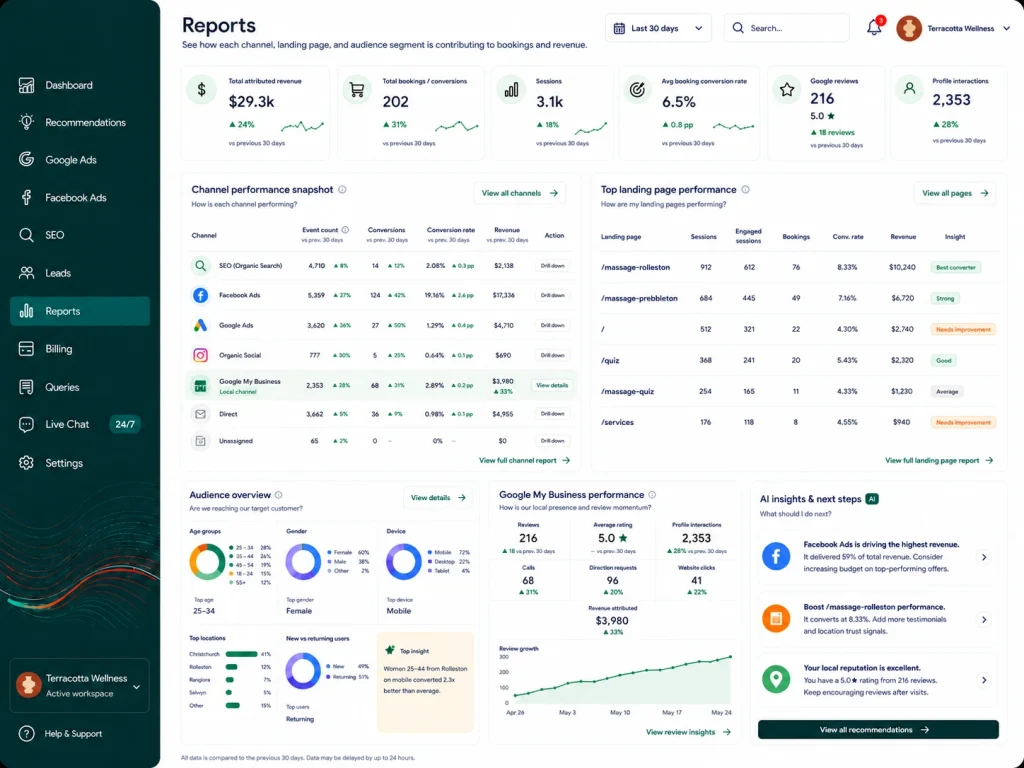
Methodology and source notes
- The performance figures reproduce the results requested by innflo and are supported by the supplied platform screenshots and internal client reporting. Where a screenshot shows a later cumulative total—for example, 252 Google reviews—the document distinguishes that from the three-month case-study result.
- “Tracked revenue” is revenue recorded through the connected analytics, campaign, booking, and business reporting stack. It is not presented as audited financial reporting or as a controlled estimate of incremental revenue.
- Platform totals differ because Meta, GA4, ActiveCampaign, Google Ads, the Google Business Profile, and the booking system use different identifiers, attribution windows, event definitions, and date ranges.
- Public website observations were checked on July 28, 2026. Search rankings vary by location, device, personalization, and time; the #1 position and 1.4 average position are based on the reported Google Search Console measurement window.
- Claims about innflo model training, client-data isolation, exportability, and operating design are innflo product claims supplied for this case study.
Sources
[1] Terracotta Wellness homepage
[2] Terracotta Wellness — Massage in Rolleston landing page
[3] Google Ads Help — About Quality Score for Search campaigns
[4] Google Business Profile Help — Tips to improve your local ranking on Google
[5] Google Analytics Help — Select attribution settings
[6] Meta Business Help — Promotion guidelines
Primary campaign evidence: supplied screenshots from Meta Ads Manager, Google Analytics 4, ActiveCampaign, Google Business Profile, Terracotta landing pages, brand voice materials, and the innflo client workspace.